

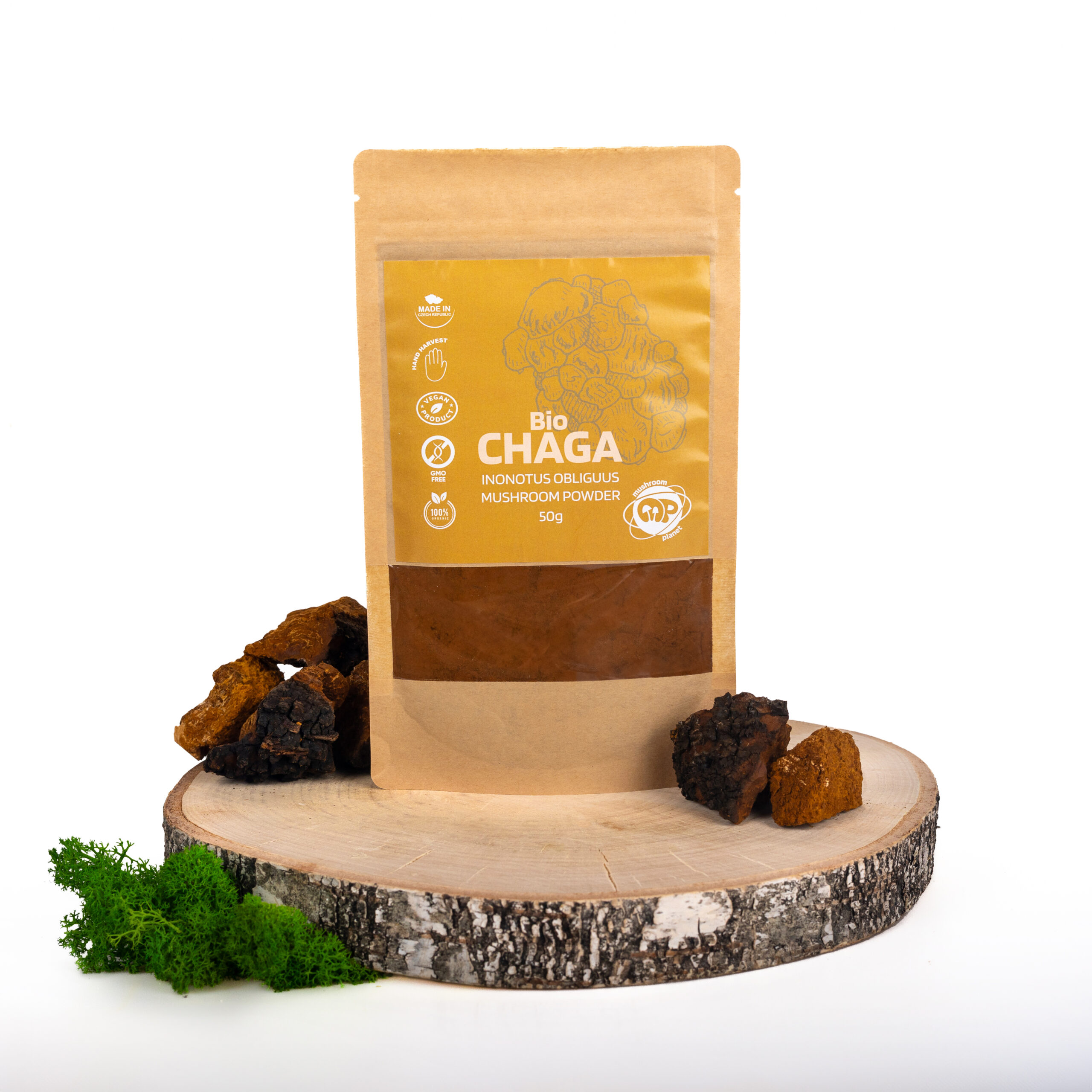

CHAGA SIBIŘSKÁ (INONOTUS OBLIQUUS)
185Kč




Description
INFUSION AND MUSHROOM FLAVOR
How to prepare chaga?
Chaga can be used in many ways — added to water, coffee, milk, hot chocolate, juice, or smoothies. The deep brown powder has a bittersweet taste. Because it is made from ground mushroom mass (sponge tissue), it does not dissolve in water. You can add it to meals or drinks, or use it to prepare a tea-like beverage.
Processing and ingredients
After harvesting, the mushroom is cut into small pieces and slowly dried to preserve the maximum amount of nutrients. Chaga is full of bioactive compounds beneficial to the human body:
Betulin and betulinic acid – contribute to defense against infections and lifestyle-related diseases.
β-glucans – powerful immunostimulants.
Melanin – acts as an antioxidant.
Terpenes and steroids – studied for their potential effects in relation to tumor diseases.
It also contains vitamins D and B-group vitamins, calcium, zinc, magnesium, iron, and other minerals.
The fruiting bodies used to make our powder come from the pristine forests of Finland, growing in natural conditions untouched by human activity. Thanks to this, they are completely free of contaminants or residues.
ORIGIN OF THE MUSHROOM
Chaga, also known as “Siberian Chaga,” is the common name for the fungus Inonotus obliquus. In the fungal kingdom, it belongs to the group of basidiomycetes — mushrooms whose fruiting bodies contain spore-producing hymenium. It is further classified among hymenomycetes, the same category that includes puffballs, chanterelles, cauliflower mushrooms, oyster mushrooms, porcini, and bracket fungi.
Inonotus obliquus is a parasitic fungus that grows on deciduous trees — most commonly birch, beech, poplar, oak, or alder. Anyone who spots it in the forest is unlikely to admire its beauty — its dark to black fruiting bodies form irregular, very hard growths on the trunks.
These formations can sometimes be massive — penetrating the tree trunk and covering even half of its circumference. Immature fruiting bodies tend to be smaller (10–35 cm), with a hemispherical, uneven shape, turning from grey to rusty brown over time. They can live for up to 20 years and gradually weaken the tree they grow on.
Siberian Chaga is found mainly in the forests of Russia, Northern Europe, North America, and Asia — regions with cold climates. Its reputation in these areas is tied to its traditional health-related uses.
It has been used since ancient Mesopotamia and Egypt and remains popular in China and Japan. In Russia, it held an important place in shamanic rituals.
Tea Preparation
Water temperature: 70–80 °C
Amount: 1 teaspoon per 250 ml of water
Dosage: 1 teaspoon twice a day, ideally 20 minutes before a meal
Recommended duration of use: maximum of 8 weeks
Additional information
| Weight | 0.2 kg |
|---|
Ostatní také zakoupili
-
-
-
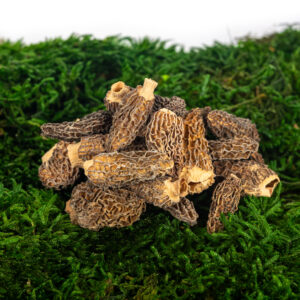
Smrž sušený
Price range: 99Kč through 999KčSelect options This product has multiple variants. The options may be chosen on the product page -
-
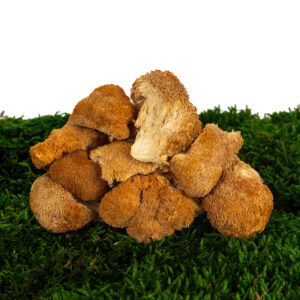
Korálovec ježatý sušený (Hericium Erinaceus)
Price range: 149Kč through 295KčSelect options This product has multiple variants. The options may be chosen on the product page -
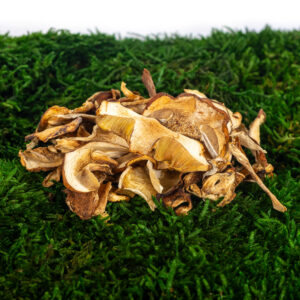
Směs hřibovitých hub
Price range: 179Kč through 349KčSelect options This product has multiple variants. The options may be chosen on the product page -
Směs hřibovitých hub
Price range: 179Kč through 349KčSelect options This product has multiple variants. The options may be chosen on the product page -
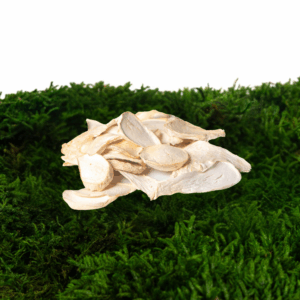
Hlíva ústřičná sušená (Pleurotus Ostreatus)
Price range: 79Kč through 195KčSelect options This product has multiple variants. The options may be chosen on the product page -
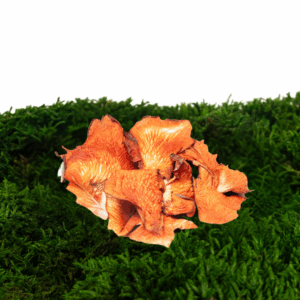
Hlíva růžová sušená (Pleurotus D’jamor)
Price range: 119Kč through 295KčSelect options This product has multiple variants. The options may be chosen on the product page -
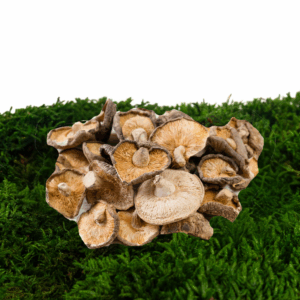
Shiitake sušené (Lentinula Edodes)
Price range: 199Kč through 395KčSelect options This product has multiple variants. The options may be chosen on the product page
Reviews
There are no reviews yet.